The brief
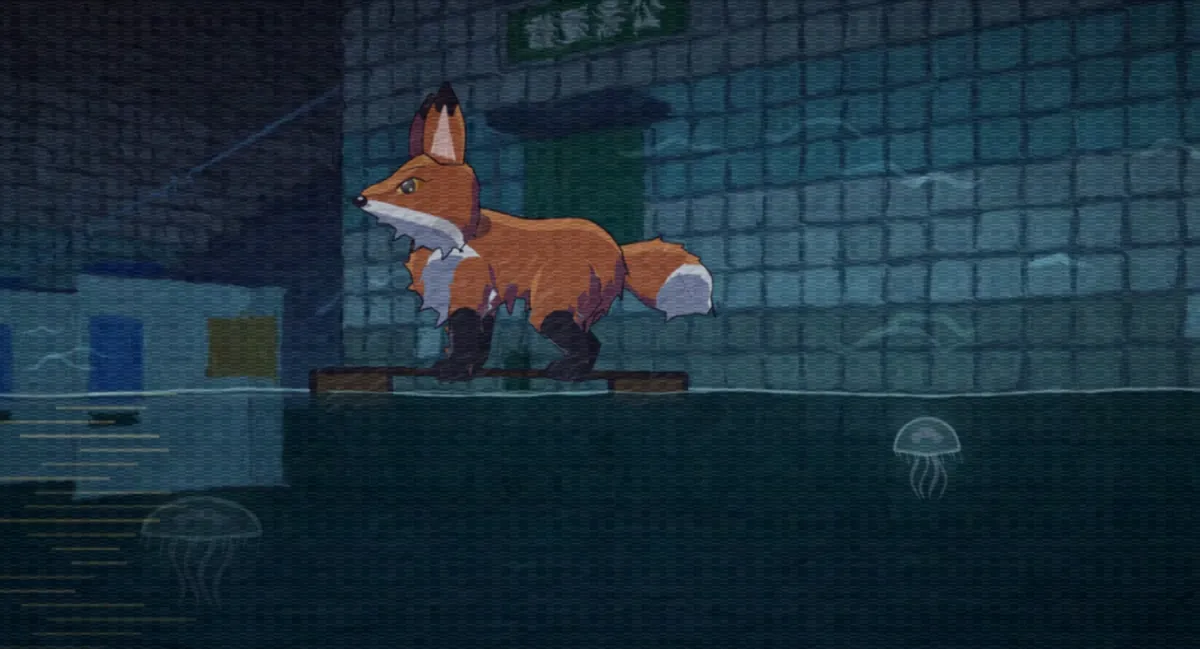
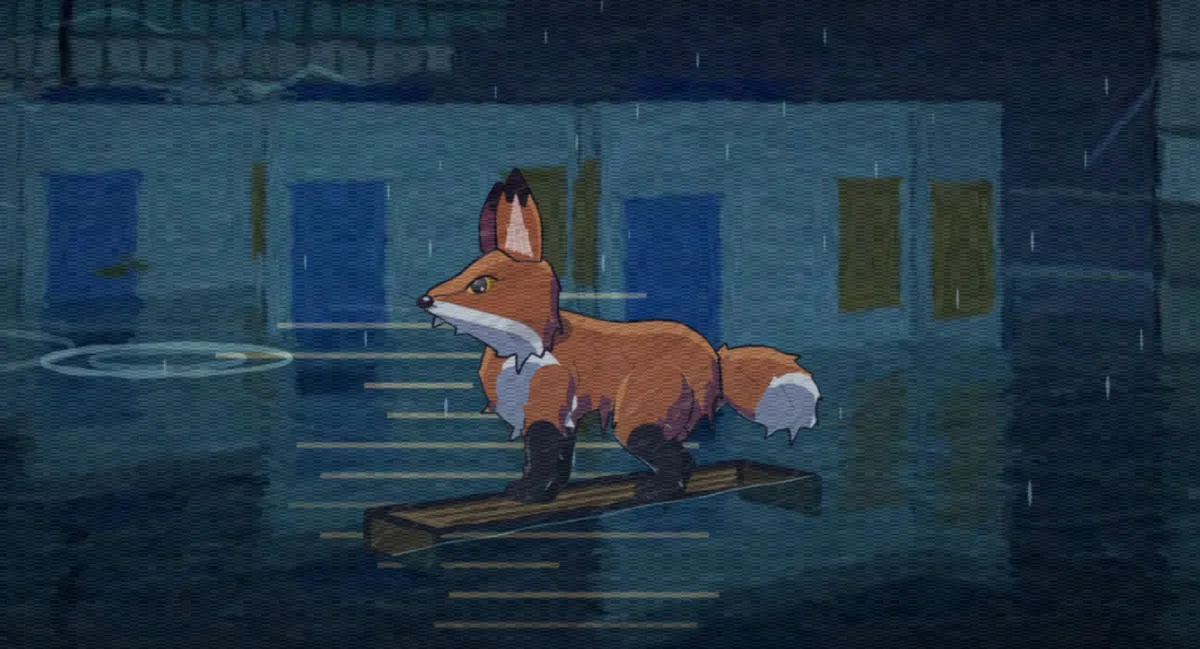
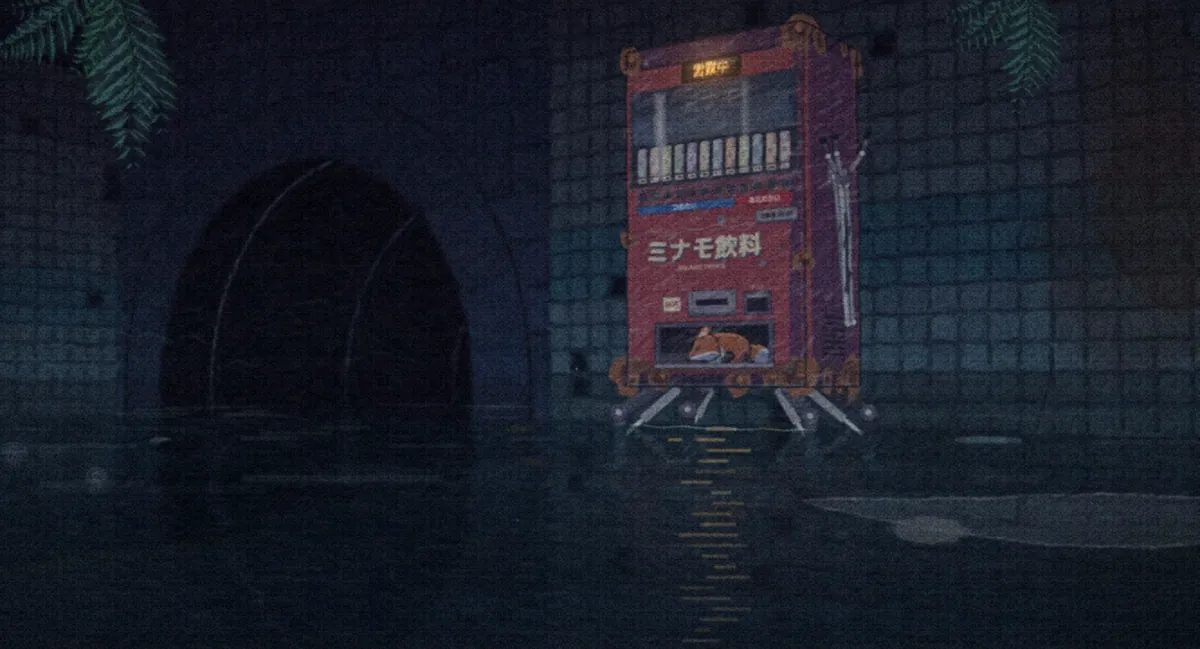
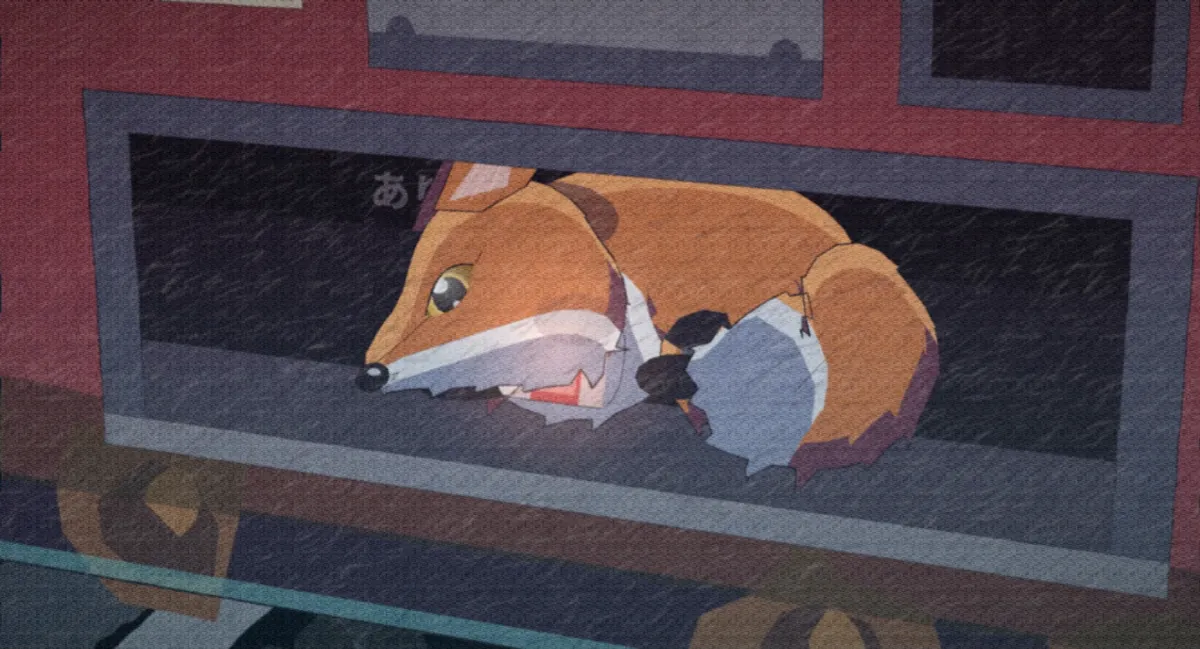
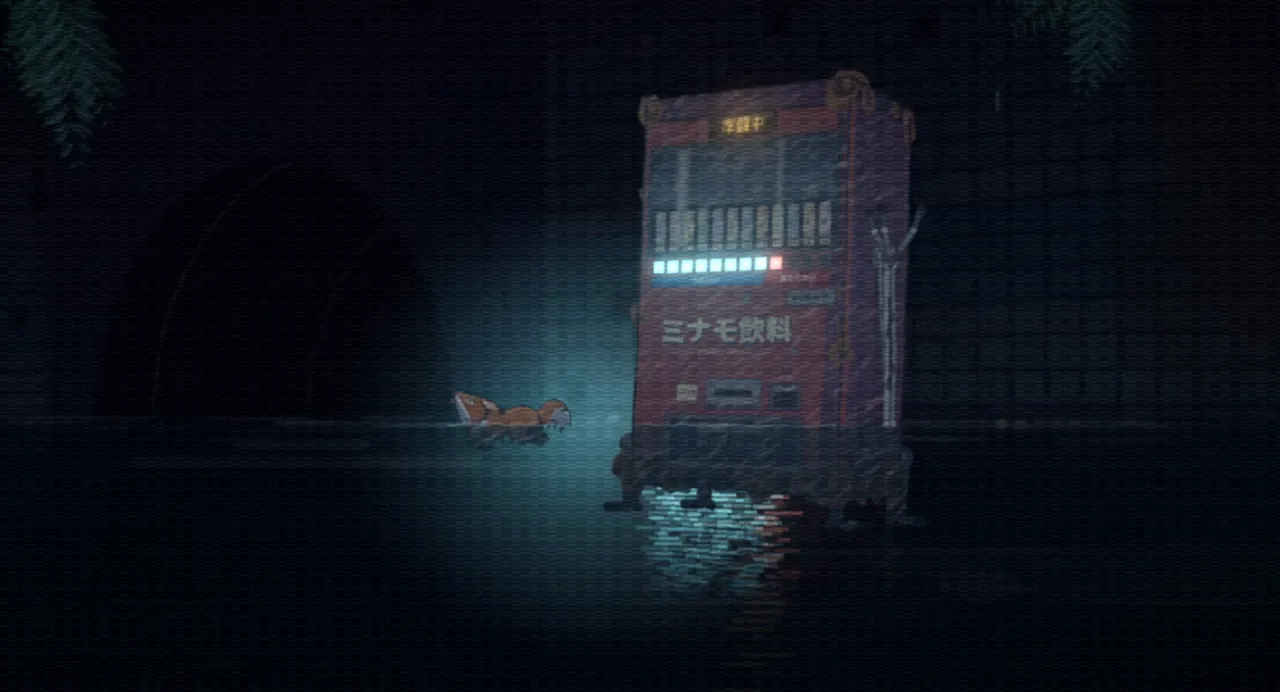
A short anime film in the look of a 1990s theatrical release shot on 35mm. The story is small: a sleepy vending machine robot in an abandoned subway station wakes up during a storm surge and pulls a fox kit out of the water.
The bar was strict. No 3D shading, no retro filter laid over clean digital art, no melted lettering and no characters floating above the water. Browsers draw perfect curves and smooth gradients, so everything that makes a frame look hand-made had to be built back in on purpose.
It is a concept piece. Nobody hired us for it, and Minasoko station is made up.
What we made
- Last Train at Minasoko Station, a 98 second short plus a 5 second end card, in a 1.85:1 theatrical frame
- The whole film as one HTML file of 1.7 MB that plays offline and draws every frame at playback time
- A 1920 x 1080 master with the letterbox built in, rendered from that same file
- An original score and every sound effect, synthesized live and timed to picture
- Drawn entirely in code written by Claude Opus 5.5
How it works
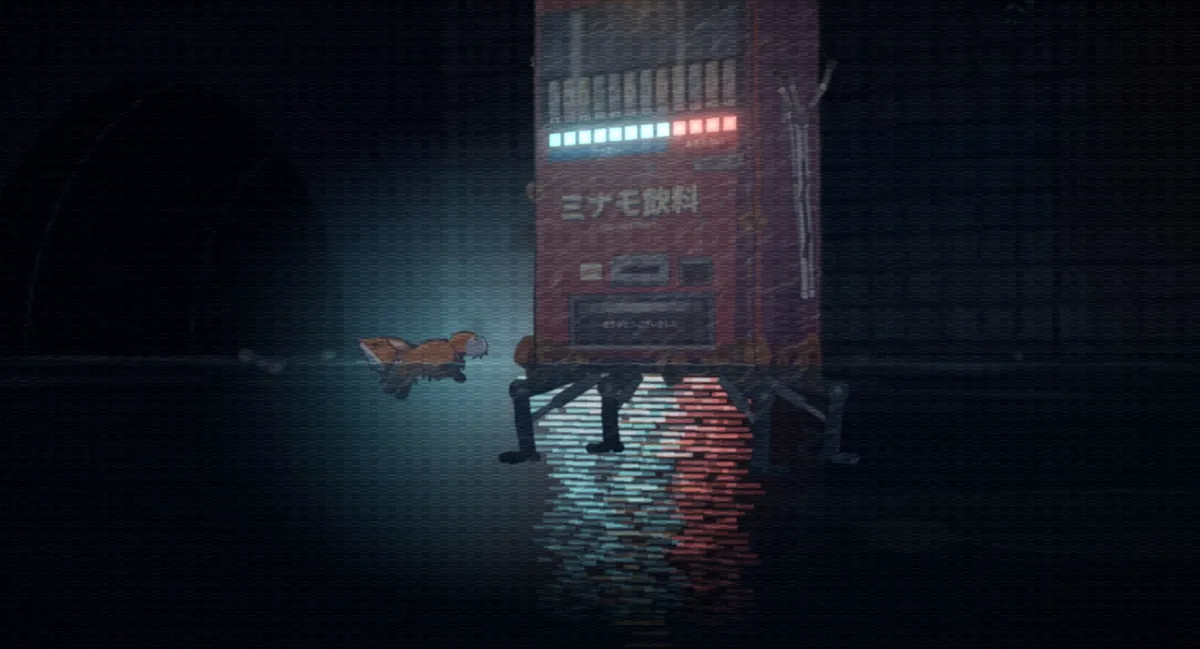
The vending machine is one 3D model, and each face is drawn as inked cel art: chipped red enamel, rust under the rivets, faded cans, a cracked corner and a dot-matrix display that changes its sign through the film. Because it is one model, it stays the same design from a wide shot down the platform to a close-up of the coin slot.
The fox is a drawn rig in the same ink and paint, with wet fur that clumps, a lit edge on top and a hard shadow underneath. When it turns around, it passes through a front-facing in-between drawing, the way a hand animator would do it.
The station is built in 3D, then repainted by a brush-stroke painter written in Python. Eleven painted plates cover every camera angle. Characters change drawing every second frame and effects every third, with true holds, and the camera moves like a rostrum camera over flat artwork.
When the station goes dark, twelve drink buttons wake one by one, each with a two-tone chime a semitone higher than the last, and they throw cyan and red light across the flood. A film finish adds glow, grain, gate weave, flicker and dust. The score is detuned keys, a cello drone, a breathy flute and a music-box motif built from the button chime, with no samples.
What we threw away
The film went through six passes. Each one ended with a full render reviewed frame by frame, plus an automated scan of every drawing for pops and flashes.
Glows first rendered as solid discs because the glow layer was transparent. Fixing that also fixed a washed-out lightning flash. Water was drawn through a wall, the tunnel arch came out stepped, the kit turned grey in the dark and one close-up camera lost its subject. Each was fixed and checked on new frames. The file also went from 2.4 MB down to 1.7 MB so it loads in phone viewers.
Limits
This is concept work with a made-up place, so there are no client numbers and no results to report. The Japanese signage is invented set dressing.
The film has no dialogue. Its frame is 1.85:1, so a phone in portrait shows it small unless it is cropped for vertical.